

The Dark Knight was an early favorite of mine. As I first started getting into film, a friend of mine told me about this movie a few years after it first came out, as I was still very young when it released. I watched it in time to catch the sequel in theaters. From this, a hobby, which soon became more of an obsession, was born.
I find it appropriate to start this endeavor, on this website – where I aim to talk about film and other arts, from their history and production background, to dissecting their themes, and recontextualize, with the benefit of hindsight, their place in modern culture – with this film.
Released in July of 2008, it was directed by Christopher Nolan, who had previously directed the first installment of what became his Batman trilogy a few years earlier, with Batman Begins – a good, if somewhat flawed origin story for this grounded take on the Caped Crusader’s mythos. Nolan first broke ground in Hollywood with Memento, in 2001, a couple of years after his debut with Following (1998). He followed that with a remake of the Norwegian crime film Insomnia, starring Al Pacino, Robin Williams and Hillary Swank. Prior to The Dark Knight, he also directed The Prestige, with Christian Bale and Hugh Jackman (2006).
The Dark Knight was met with much anticipation, this being the first film to feature arguably the most famous – or rather, infamous – villain from Batman’s rogues gallery since Jack Nicholson played him in Tim Burton’s Batman (1989). While there was some speculation and doubt regarding Heath Ledger’s casting in the role of the Joker, fans were still excited to see the next chapter in Nolan’s Batman universe. Heath Ledger had previously starred in films such as 10 Things I Hate About You (1999), and Brokeback Mountain (2005), the latter earning him a nomination for Best Actor at the 78th Academy Awards. He died in January of 2008, before the film was completed. Also of note, Aaron Eckhart starred as Harvey Dent, also a popular and historic character from the comics, and Maggie Gyllenhaal replaced Katie Holmes in the role of Rachel Dawes, an original character created specifically for the films, and love interest for Bruce Wayne, played by Christian Bale, who was reprising his role.
The Dark Knight took the world by storm. It was a major success at the box office, grossing more than a billion dollars worldwide, with more than half of that coming from the domestic market alone, according to Box Office Mojo. It was nominated for 8 Oscars, at the 81st Academy Awards, including a posthumous Best Supporting Actor nomination (and win) for Heath Ledger, who received universal praise. Controversially, the film was not nominated for Best Picture, with the Academy coming under fire for perceived bias against superhero films. The number of nominees for the following ceremony was expanded, allowing for up to 10 films to be nominated, a model which continues until today.
In the years since, The Dark Knight has received significant attention due to its politics – or at least, people’s perceptions of its politics. Nolan has often been criticized for not allowing for a lot of space for critical analysis in his films, always telling the audience – rather than showing – exactly what every scene means and is supposed to represent. However, I believe it is far more ambiguous and nuanced in its messaging than people give it credit for.
The Dark Knight touches on a lot of interesting themes, such as whether the ends justify the means, the notion of a superhero in the context of the 21st century, the use of mass surveillance in the pursuit of justice, and the failure of modern institutions in the face of acts of terror and crisis. Batman is seen as much as a symbol, as an inspiration to do something, with various copycats taking up to the streets, failing to live up to the mantle by using guns, something that the real Batman would never do. An alliance between Batman, Police Lt. James Gordon (played by Gary Oldman) and District Attorney Harvey Dent inspire hope in the people of Gotham, as the trio vows to end crime in the city by removing power from the mob. Dent, in particular, is touted as Gotham’s white knight, the best of humanity. As a foil to their plans is the Joker, who stands for anarchy and chaos.
While the trio are initially successful in mass apprehensions of mob members and thugs, eventually the Joker starts displaying the corruption, weakness and inefficacy of institutions such as the police force, the courts and city hall. And this is where the film’s thesis starts to take shape.
The Dark Knight was released at the end of George W. Bush’s presidency. A few years earlier, in the aftermath of 9/11, panic and mass hysteria was felt all over the country. Campaigns were mounted as part of the War on Terror, with several controversies surrounding it, from the infringement of individual freedoms with the excuse of public safety, to the torture of prisoners, to the notion that the invasions of middle eastern countries were only being carried out for the purposes of oil obtainment.
The film evokes these very anxieties. As Joker, who stands for the radicalized and abused by the system, commits more and more terrorist acts, such as blowing up a hospital in one of the film’s more spectacular scenes, public opinion of our heroes’ sways somewhat. Why won’t this vigilante come forward and stop this from happening by revealing who is under the cowl?
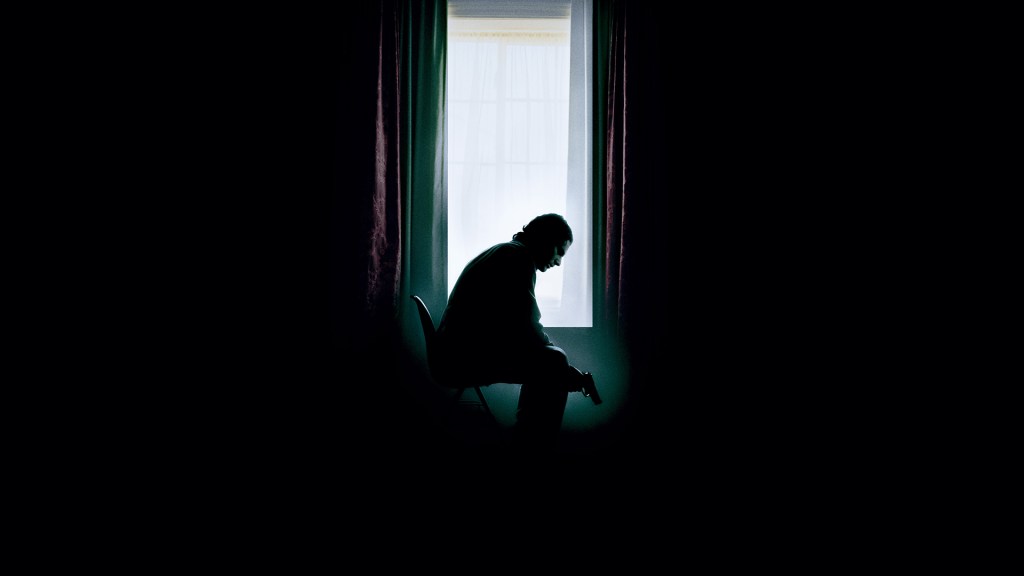
The Dark Knight is a deconstruction of the superhero genre, and of the superhero archetype itself – Batman isn’t a perfect hero, he’s a morally conflicted, isolated and emotionally burdened vigilante. Vilified and alone by the end. The film works as a critique of his methods, and not necessarily an endorsement.
Where some will see the use of surveillance and other such methods as echoing Bush era politics, particularly the Patriot Act, and the War on Terror, and therefore defend that the filmmakers endorse such tactics, I believe that rather than glorifying authoritarian measures in the face of extraordinary threats, it instead poses the question: to what lengths are we willing to go to in order to defeat evil, and at what point do we lose ourselves? Rather than provide any concrete answers in the form of clear ideological solutions, it asks questions instead.
The failing of modern institutions, and the praise of individual brilliance in the characters of Batman, Gordon and Dent, would make it seem that the film undermines democracy and has a conservative view of the world, but the ferry scene proves otherwise. Collective morality wins over fear, and the citizens choosing not to kill each other prove the Joker wrong – not everyone shares his cynical worldview, which could justify authoritarian control. Ordinary people can choose peace.
Batman fails to stop the chaos at every step. He is a tragic figure; one whose methods continually raise ethical alarms. The Joker himself is a product of his jurisdiction – or lack thereof. Afterall, the latter would not exist without the former. In the end, Dent falls, his noble ideals corrupted by his vendetta. The ends do not justify the means. Rather than promoting authoritarianism through necessary, unelected enforcers, The Dark Knight grapples with the temptation of it, reflecting the post-9/11 moral uncertainty without offering easy answers.


 Kino Meditations
Leave a comment